Project Manifesto
This documentary is a systematic, evidentiary investigation into the intersections of scientific inquiry and educational experience across four and a half decades of American institutional life.
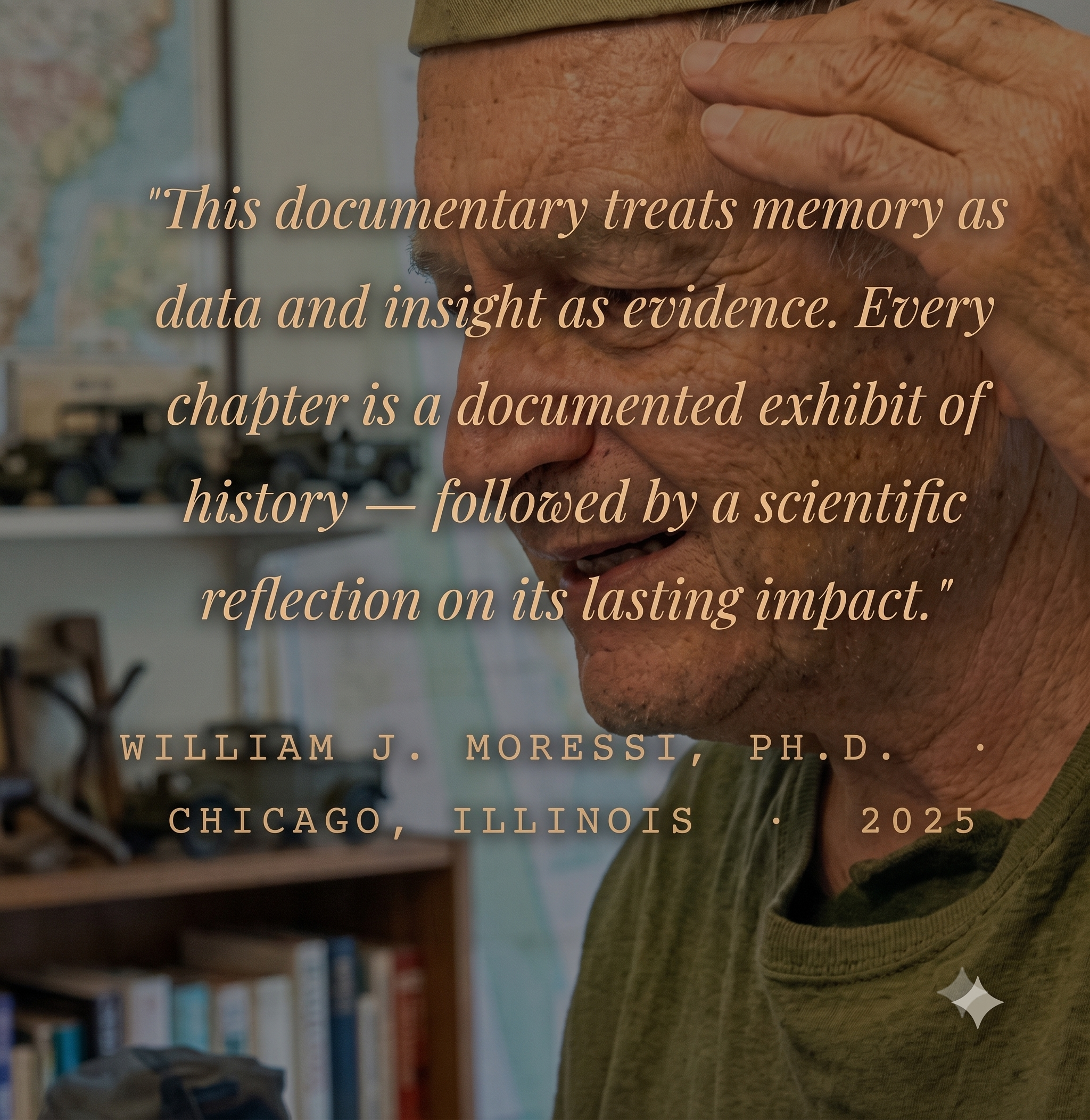
It is not a conventional career retrospective. It is a dual-layered narrative that treats memory as data and insight as evidence. Every chapter functions as a documented exhibit of history, followed by a scientific and educational reflection on its lasting impact. The same discipline that drove the laboratory work — define the problem, examine the evidence, test the hypothesis, state the conclusion — governs the retrospective analysis of the life itself.
The record spans Cold War radiation biophysics and CIA analytical work, a decade of reinvention through information technology, and twenty years of institutional transformation at three universities. The methodology remained constant throughout. The institutions changed. The entropy was always the same problem. The solution always began with evidence.
The Documentary Layer
The objective record. Archival documents, primary sources, institutional correspondence, photographs, and factual chronologies. The grounded reality of what occurred within the systems of science and education.
The Reflection Layer
The subjective inquiry. The retrospective analysis — the scientific and philosophical weight of those events examined through a mature, forensic lens. The evidence interpreted, not merely presented.
The Five Chapters
-
1ChapterCold War Science — Radiation Biophysics and the Making of a ScientistUniversity of Iowa · University of Illinois · 1959–1968 · Microwave radiation research, national laboratory collaborations, CIA analytical service, and the defining institutional confrontation of 1968.→
-
2ChapterTransition — From Academic Medicine to Information TechnologyChicago · Honeywell Institute · Metropolitan Water Reclamation District · 1968–1979 · Reinvention, the Prairie Plan environmental database, Fermilab, and the path back to academia.→
-
3ChapterJohnson C. Smith University — Building the FoundationCharlotte, North Carolina · 1979–1984 · Rescuing a failing Data Processing Center, IBM systems infrastructure, early neural network seminars at Research Triangle Park, and the Charlotte Apple Computer Club.→
-
4ChapterWinthrop University — Infrastructure, Policy, and the Limits of Institutional ProcessRock Hill, South Carolina · 1984–1995 · WinNet, the NSF internet grant, "Towards Negative Entropy," Hurricane Hugo, the Kinard fire, and a forensic ACH analysis of institutional advancement.→
-
5ChapterNortheastern Illinois University — From Entropy to UnityChicago, Illinois · 1995–2004 · One staff member to 150. Fragmented IT to unified CIO-led structure. The "Towards Negative Entropy" methodology at full institutional scale, and nine years of community service.→